

Everything you need to know about Kaunas before your trip , from currency to language, local festivals, time zones & safety of the water. Plus great ideas about what to see, do and eat while in Kaunas, Lithuania!


Folk traditions says a Kunas founded the town ~1030 AD as a refuge. Said to be a son of the mythical Roman exile Palemon** who fled from Rome & the mad Emperor Nero, with his 3 sons (Barcus, Kunas & Sperus) - however as Nero's rule ended in 68 AD anyone fleeing his reign would be long dead by the 11c.
Alternative interpretations suggest Kaunas is derived from an old adjective which meant "deep", "low", "located in the valley" as a description of it's geographical features.
Up until the 19c Lithuanian National Revival brought back the ,Baltic/ Slavic "Kaunas" the city was called by the Anglcized version, Kovno, by most of the world.
* One 18c historian claims Lithuanians once worshipped a God name Kaunis, and he is the sorce of the name not a human, but there doesn't seem to ba any evidence for this claim
** A suburban region in the vicinity is named "Palemonas"


@ a glance essentials:

Language:
Lithuanian
_
Many Locals can speak English, particularly the younger generations in the large cities.
-


Water safety
Generally Safe to Drink
Currency:
€ Euro
Local Transport
There is a bus network in large cities but it's a but slow. Smaller towns will require a car.

.

The region around the 2nd largest city🔍 in Lithuania shows signs of human activity since the Bronze Age (1600–500 BC.) It was likely established as a fortress settlement, by the late 10c AD, on the site of what is now Old Town, (at the confluence of two large rivers, the Nemunas and Neris,) as part of the 🔎Kingdom of Lithuania.
a bit of background...
CHECK OUT THE:
......................Kaunas has the world’s only Devil’s 👹 Museum: quirky, creepy, and totally unique, The Žmuidzinavičius with over 3,000 devil figures, masks, and artworks from around the world is one of the strangest museums in Europe
FUN FACT:
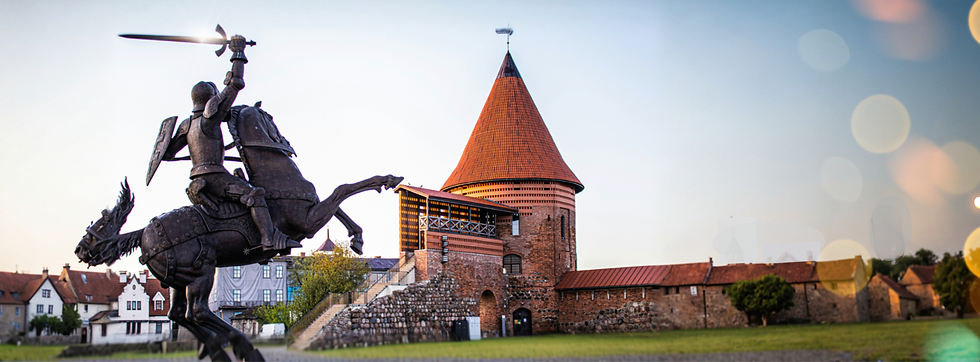
In the 13c the brick Kaunas Castle was constructed to defend against attacks by the Livonian (Teutonic) Order, but in 1362, it was captured after a siege by the Teutonic Knights. By 1441, Kaunas' Baltic🔍 trading status had grown enough to join the Hanseatic (trading) League, and it became a vital city of the Polish–Lithuanian Commonwealth🔍
After the 3rd (and final) partition of the Polish-Lithuanian state🔍 in 1795, the city was taken over by the Russian Empire🔍 . When Lithuania declared independence in 1918 Kaunas served as capital from 1919 to 1940 (as Poland had annexed Vilnius.)
Occupied by both the Soviet Union & Nazi Germany in WWII Kaunas was not free again until Lithuania regainied independence from the Soviets in 1991.
Varškės (Lithuanian Cottage Cheese) Spurgos - curd cheese doughnuts filled w/ marmalade or the
more traditional Varškės Apkepas fried cake version served w/ wild berry jam
Cepelinai - pork dumplings in creamy bacon & mushroom sauce ∞ Kebapche - grilled beef/ pork mince
Šaltibarščiai - cold beetroot soup w/ Kefir (sour milk†) ∞ Skilandis - a salami-like smoked sausage
Bulviniai Blynai - fried potato pancakes sometimes served w/ sour cream, jam or apple sauce
Kepta Duona - fried black rye w/ cheese ∞ Kugelis (or Bulvių Plokštainis) - baked potato pudding
Balandeliai - cabbage leaves stuffed w/minced meat, rice, onion & veg, stewed in pureed tomato sauce along
Tinginys ( i.e. "lazy man")- no-bake blend of crumbled cookies & condensed milk ∞ Spurgos - Lithuanian donuts
Šakotis - Lithuanian tree cake w/ a thick batter poured over a rotating horizontal spit, creating a pine tree shape
Šimtalapis - layered, ancient Tatar sweet of honey, nuts, poppy seeds
Seinų (aka Lazdijų krašto medus, Miód z Sejneńszczyny) - honey from a polyfloral nectar in the Lazdijai District
Gira / Kvass - fermented malty rye bread drink ∞ Krupnikas - honey liqueur ∞ Vyšninis - cherry beer / spirits
➿➰➿
† Traditionally made by shepherds storing dairy in leather travel bags

Must Try Local Cuisine:
SEE
DO TRY
&
VISIT
What to Where to Why . . .
Highlights:

📍 Church🔍 of St. Gertrude 📸 - tiny brick Gothic c.15c hidden in a square off Laisves aleja or
St. Francis Xavier, Gothic Archcathedral🔍 Basilica of St.s Peter & Paul 📸 (c.1413)
Church of the Holy Sacrament or Carmelite Church of the Holy Cross
📍 Money Museum - (an extension of the museum in Vilnius) in the historic building of Lietuvos
bankas, showcasing the history of Lithuanian currency
📍 M. K. Čiurlionis National Art Museum - dedicated to painter/ musician M.K. Čiurlionis' in
impressive "Modernist Architecture of Optimism" bldg
📍 Žaliakalnis Funicular Railway & Aleksotas Funicula- historic mountain rails (cash)
📍 "Hunter’s cuisine" (venison, wild boar, elk) @ places like Medžiotojų Užeiga (Hunters’ Inn)
or Bernelių Užeiga for the full traditional experience (with folk music on Thursdays)
📍 Lietuvos Medicinos / Museum of History of Medicine & Pharmacy - unique museum preserving the folky
history of medicine in Lithuania
Surprises:
📍 Museum for the Blind - with works created by visually-impaired artists & touch-based models for the blind, both
for the blind to enjoy & for the seeing to better understand the blind's experience - all in the dark catacombs of the
19c Neo-Byzantine & Orthodox St. Michael the Archangel Church / the Garrison Church, 📸 (built for the Russian
Garrison when Kaunas was part of the Russian Empire) often hosting church music concerts and acting performances.)
📍 Kiemo Galerija (Yard Gallery) 📸 - courtyard of colorful street art, tile work, murals & photos of old Jewish residents
📍 Star Seeder - statue of a man sowing seeds that interacts with the street lights. at night
📍 Spurginė Doughnuts - retro Soviet-era local favorite, frying fresh spurgos (doughnuts) in classic marmalade-filled
or savory options, with grumpy old ladies behind the counter (cash-only)







Most Known For:


♦️ Kaunas Castle - 14c Medieval Gothic stone castle, Lithuania's oldest, on the banks of the
Nemunas, built to repel Crusaders, now a branch Kaunas City Museum
🔸 Basilica of the Resurrection/ Christ Resurrection Church - massive Art Deco/ Interwar
church, and example of "Modernist Architecture of Optimism"
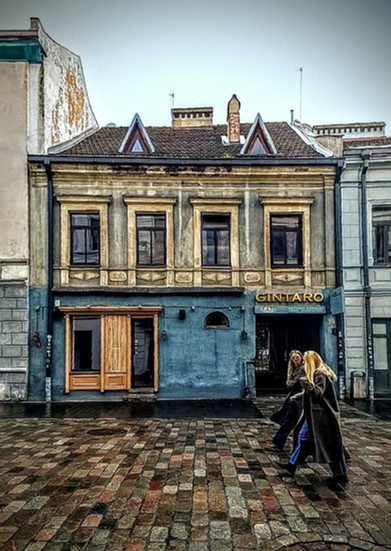
♦️ Kauno Senamiestis (Old Town) - with Laisvės Alėja (Liberty Ave), wide street (longest
pedestrian boulevard in Eastern Europe) full of shops & cafés, the “White Swan;” 16c
Town Hall; Gothic, Baroque & early Classicist style, (nicknamed for it's tall tower that
looks like a swans neck) in Rotušės Square & Perkūnas House: intricate 15c brickwor
bldg built by Hanseatic merchants, then sold to the Jesuits (a.k.a. the "Thunder House"
for pagan thunder god figure, Perkūnas, hidden in the walls.) Napoleon stayed in 1812
on his way to Moscow, and it later housed the city's 1st drama theater
🔸 Kaunas Fortress' built late 19c. during Soviet occupation with it's Ninth Fort - prison/ way-station
for those being sent to labour camps, later used by the Nazis as a place of execution for Jews, now
home to Vytautas the Great War Museum, WWII memorial, Monument to the Victims of Fascism
& Museum of Genocide Victims
♦️ Pažaislis Monastery & 17c. Baroque domed Church of the Visitation - founded by monks of Camaldolese
🔸 Vytautas the Great Church of the Assumption - 14c Gothic, oldest church in the city, built for Franciscan monks
♦️ The Banknote Building - 10 stories of screen-printed glass, covering an entire office block designed in the form
of a giant 1,000 LTL banknote (Lithuanian litas, currently replaced by the euro)
📽️ NOTABLE FILMS SHOT IN KAUNAS:
⭐ Chernobyl (HBO) | 2019 ⭐ Honey (TV) | 2025/26 ⭐ Catherine the Great | 2019
(doubling for Moscow) (doubling for 80s East Berlin)
🍿
.......................Folklore claims Kaunas Castle holds medieval cursed treasure, hidden from the Teutonic Crusaders in underground chambers / secret tunnels that connect to churches and the river e.g. (spaces said to also “hold” the dead; prisoners of war, thieves, those who starved during sieges, and even a witch/healer that haunts the castle.)
The treasure can only be safely claimed when “Kaunas Castle is truly at peace.” In modern tellings it's said to be guarded by the friendly "Beast of Kaunas"† who dwells beneath the castle.
† This myth inspired a illustrated map to various locations associated w/ the lore, highlighting the Beast's footprints & favorite spots around the city.

🌀 Pažaislis Music Festival (Summer) - Classical & chamber music in the stunning Baroque Pažaislis Monastery
🌀 Kauno Miesto Gimtadienis (Birthday Festival) (~May 23–25) - city-wide celebration with parades, craft markets,
traditional food, pop-up art, fireworks, and historical reenactments
🌀 International Folk Dance / Folklore Festival (June) - traditional folk dances, costumes, crafts, & food
🌀 ConTempo Festival (Aug) - international contemporary performing arts & experimental theatre festival
🌀 Feast Of Saint John/ Midsummer/ Joninės, Rasos, or Kupolė (June 24) - a once pagan country with nature
worship, the Feast absorbed ancient solstice traditions (like wishing luck on others by letting flower wreaths
float in the Neris River, bonfires at night plus singing & dancing)
Close Enough to Visit:
🪧 Vilnius - with historic old town, Vilnius Cathedral & artsy neighborhood of (independent) Uzupis
🪧 Curonian Spit National Park near coastal Klaipeda, home to the tallest shifting sand dunes in Europe, the
Hill of Witches; outdoor trail of hand-carved wooden sculptures of folk tales, legends & pagan traditions, &
Nida's Ethnographic Cemetery containing some of the oldest graves in Lithuania with 16c “krikštaia” sticks
placed at the foot of graves reaching into the bed; believed to help the deceased to stand at the resurrection†
plus nearby spa town Neringa
🪧 Hill of 𓂃+✝︎+𓂃 Crosses old hill fort by Šiauliai (near Šeduva) w/ 100,000+ crosses & religious statues, believed
to have been placed by locals as early as 1831, becaming a popular pilgrimage for Lithuanian Catholics & symbol
of national defiance during Soviet occupation (bulldozed 3x, the Lithuanians continued to re-erect the crosses)
plus Seduvos Malunas - a windmill c.1905 transformed into an adorable lake-side hotel
🪧 Trakai Island Castle on Lake Galvė | Trakai Historical National Park, begun in the 14c and completed by
Vytautas the Great, who died in the castle in 1430, (one of the main centers of the Grand Duchy of Lithuania)
🪧 Ancient Beekeeping 🐝 Museum | Musteika - a tiny village practicing an ancient, natural method of beekeeping in
hollowed out pine trees. The museum cover traditional beekeeping equipment and history (in Lithuanian
mythology, bees are “God’s holy bugs.”) Plus nearby Hotel Pušynas in the Soviet resort town Druskininkai & it’s
open-air museum, Grūtas Park, a large collection of Soviet-era statues
🪧 Europos Parkas | Joneikiškės - a curious art park home to 3,000 televisions 📺 + other “wonders” near to Paberžės
seniūnija, a monument marker for the (claimed††) geographic Center of Europe
🪧 Molėtai Astronomical Observatory & Ethnocosmology Museum | Kulionys - 1st museum in the world dedicated to
exploring humanity's cultural relationship with the celestial world.
† Differing for males; decorated with carved horse (from oak, ash, and birch) & females with birds (of linden, poplar, or spruce) Later, in 18c, other designs
such as plants, hearts, and different symbols were used.
†† Kremnické Bane | Slovakia & Rakhiv | Ukraine, also claim the title based on differing methods of calculation / definitions of Europe's boundaries
Site Key:

Five Star Recommend
Make the Time!

Worth the Effort/ $


Going to visit
Make a DONATION of $5 or more and receive a FREE Thank You Gift of a FULL CITY TRAVEL GUIDE with even more favorites and the address/ contacts for all recommendations. Just include your EMAIL ADDRESS in the transaction description of your donation along with the word
Kaunas
Kaunas

UNMOORED DETAILS DESTINATIONS PLAN YOUR TRIP ON A BUDGET TRAVEL BLOG
YOUR HOST- JULIA EUROPE PLANNING, PACKING & PASSPORTS HISTORY & CULTURE
SPECIAL THANKS AFRICA & MID EAST BOOK TRANSPORTATION MYTHS, LORE & LEGENDS
PRIVACY & TERMS OF USE ASIA & OCEANIA SLEEPING ARRANGEMENTS FRIENDS & ADVENTURES
CONTACT THE AMERICAS TRAVEL INSURANCE LOCAL FESTIVALS


Notices: Unmoored is not a licensed travel agency. The Site's intended to educate, inform & entertain and is not to be used as a source of official travel itinerary planning, or legal advice. It is merely the experiences and reflections of fellow traveler. - The site may contain affiliated links, (there is never any extra cost to you for using these links) but Unmoored only includes affiliated links for products/ companies that we would willing endorse on the site even without the affiliation.