


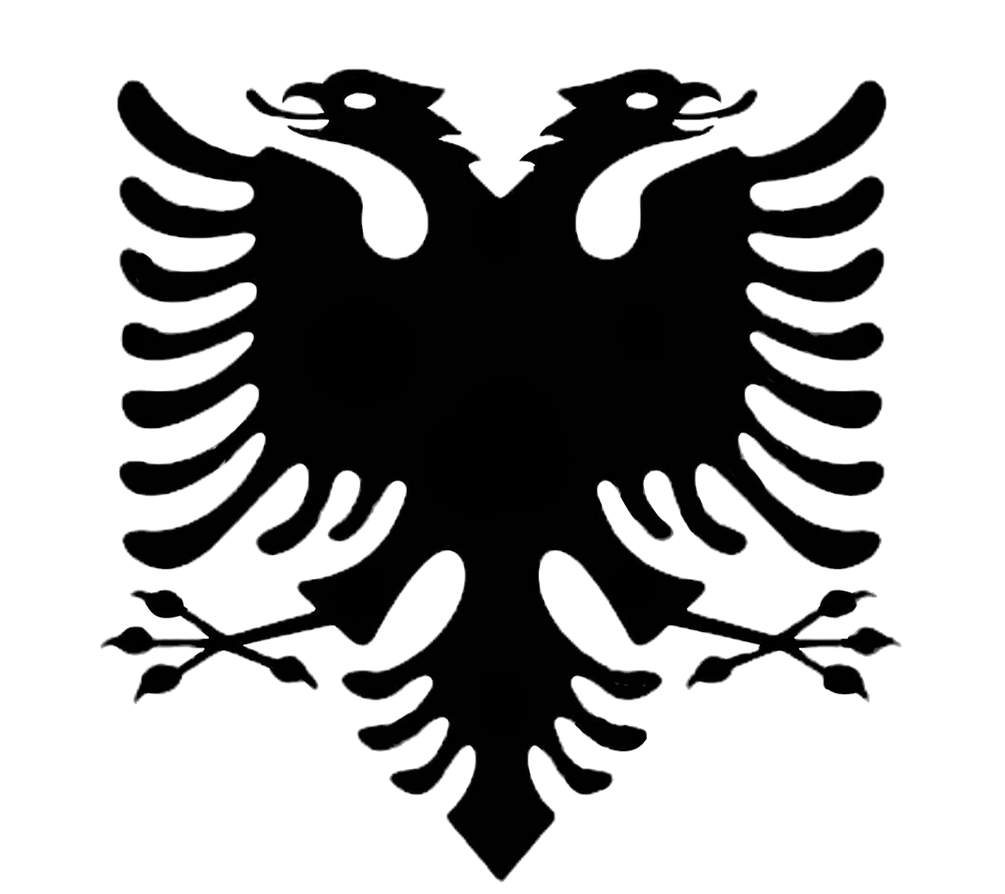
CIRCA - ~1048 ☬ - an eagle with 2 heads, wings elevated, beak + talons prominent
HISTORY: The Byzantine Empire🔍 didn't use heraldry in a traditional European sense but aristocratic families, and military
units e.g. did employ identifying symbols, several of which have endured, particularly through contact with 12c- 13c crusaders,
(having been used during the subsequent establishment of crusader ruled Frankish lands)
Today they serve as important motifs in modern flags & national seals/ coats of arms etc.
The DUAL/ DOUBLE-HEADED 🦅 EAGLE:
The single-headed AQUILA 𖤍 EAGLE🔍 inherited from the Western Romans* continued in use until well into the 11c

(Symbolically making Byzantines "eagle-bearers;" inheriting the empires symbolic authority)
The eagle's wings elevated, beak + talons prominent, are a symbol of predatory vigilance & territorial grasp.**
But the true, uniquely, Byzantine symbol was it's evolution into the:
The DUAL-HEADED ☬ EAGLE with 2 heads, one facing east🔍, the other west represents watching for threats from
multiple directions; denoting unified rule over it's eastern & western realms

Frequently gold on a red background, it was used on clothes** & accoutrements, though date of adoption
is debated; it begins to appear in art ~ 10c/11c but, isn't definitively used in connection with the emperor
until 1301. (The only occasion where it appears on a flag is on the 15c ship of Emperor John VIII Palaiologos.)
The TETRAGRAMMATIC ⛨ CROSS; common in the 14c-15c, a gold or silver cross with four letters beta "Β" in each corner created by the cross intersection - also survived into the heraldic tradition.
