


From Latin Graecia, the Roman exonym for the region & it's people the Graeci, Graei / Graecians, an early Italic Greek tribe in western Greece; possibly from the toponym of a city in central Greece, Graea / Γραία meaning old, (appropriately; as the Greeks are one of the world's oldest civilization.)

But since ~8c BC Greeks mostly self-identify as Hellenes† calling their land Hellas (Ἑλλάς / (Elládas) after the mythological Hellen, (two 'L's) the eponymous male ancestor of the Hellenic Tribes [mentioned in the Iliad's Catalogue of Ships as a small tribe of Thessaly commanded by Achilles] †† & namesake of an entire historical era* [not to be confused with female Helen (one 'L') of Troy.)
Hellen, (like variant Helen,) comes from Greek Hēlēnē, = shining light / torch, related to hēlios = sun.
† During the Byzantine period, the Greek-inhabited eastern Roman Empire primarily identified as Romans, and the term Hellene implied the pre-Christian pagan Greeks of myth/ history until it had an ethnic revival in late Byzantine scholarship
†† In Greek mythology Hellen of Thessaly, King of Phthia, was the grandson of Prometheus, (or, in some versions, son of Zeus) but he doesn't actually do much other than be the patriarch of the various Greek tribes Aeolians, (from son Aeolus,) Dorians, (from son Dorus,) Ionians, (from grandson Ion, by his third son, Xuthus) and Achaeans (from grandson Achaeus, also by his third son, Xuthus.)
* Initially the tribes centered in Thessaly but later expanded to encompass Dorian, Ionian, and Aeolian groups across the Aegean, unifying the disparate city-states culturally and linguistically, but still distinguishing them from broader terms like Achaeans; used in Homeric epics for Mycenaean-era Greeks

A blend of ancient history with 5,000 year-old ruins, whitewashed island villages & natural beauty; Greece is perfect for culture lovers & beach babes alike.

@ a glance essentials:
.

Language:
Greek
-

-


Water safety
Generally Safe to Drink on the mainland. GO BOTTLED ON ISLANDS.
(Oldest language still in use!) Most Locals can speak English.
Currency:
€ Euro
Local Transport
There are bus and ferry networks in large cities and even some smaller towns.

Always have emergency cash, island ATMs are notorious for going down for days at a time. And be extra cauteous if renting a car; the road-fatality rate is one of the highest in Europe.
Hot Tip:
Considered the cradle of Western civilization, human presence in Greece dates all the way back to ~700K years ago, with complex societies cropping up across the Aegean in the Bronze Age, like the Minoan culture (of greek mythological fame) on the Mediterranean🔍 island of Crete, considered Europe's 1st great empire🔍.
On the mainland, Mycenaean culture including the 🔎Kingdom of Pylos emerged just as the Minoans collapsed (possibly due to earthquakes, volcanic eruptions or even Mycenaean incursions.) Mycenae also collapsed ~1200 BC amid invasions & climatic shifts ushering in the Greek Dark Ages and followed by the Classical period (~510 to 323 BC.) with independent city-states🔍, called poleis, like Athens (the world's 1st democracy; demoskratos. [demos=people + rule=kratos] & warrior Sparta competing for dominance.
a bit of background...
.....................The Blue Doors & Domes all over the Greek Isles, Santorini Blue 🔍 also known as kyanos, is not random, it's believed to keep evil spirits away.
Fun Fact:
The Greek city-states temporarily united to fight the Persian Wars against Achaemenid expansion, followed by a Golden Age and construction of public works like the Parthenon, (despite inter-poleis warfare resuming.) Then in the 4c BC Phillip II invaded & unified Greece under the Macedonian Empire. His son, Alexander the Great conquered Persia, Egypt, Mesopotamia, & northwest🔍 India, before being fragmented by mutiny & wars of succession, which left Greece & Macedonia under the Antigonid Dynasty in the Hellenistic Age.
The Roman Empire conquered both in the 2c BC but despite subjugation, Greek culture profoundly influenced Rome, and remained influential to Byzantine even after the fall of the Western Empire. Centuries later, Slavs invaded and between the 6c - 9c AD they battled Byzantine for control. After the sack of Constantinople in 1204 AD & the short lived Latin Empire† Byzantine Greece was fragmented into feudal states with some parts falling to the Serbian Empire before the Ottomans conquered the whole region in the 14c.
A national awakening emerged in the late 18c leading to uprisings, the Greek War of Independence in 1821 & a provisional Hellenic republic🔍. Driven by sympathy for a shared classical heritage Britain, France, and Russia supported the Greeks and declared the peninsula the Kingdom of Greece (Vasíleio tis Elládos) independent from the Ottoman Empire in 1830.
The 20c was fraught with invasions, an inter-war 2nd Hellenic Republic, civil war, a military coup & Junta†† and economic strife (that has still not fully resolved.) A national referendum in 1974, abolished the monarchy in favor of the 3rd Hellenic Republic and modern Greece is now the mountainous peninsula plus archipelagos🔍 of 6,000+ islands in the eastern Mediterranean Sea🔍 including the Ionian Islands, Crete, the Cyclades.
† Established by Western European crusaders after the conquering Constantinople during the 4th crusade.
†† A government led by a committee of high ranking military leaders who seized power
Must Try Local Cuisine:
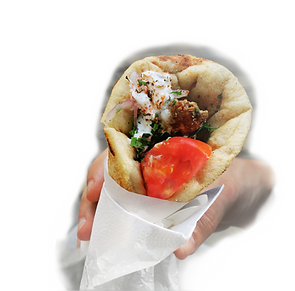
Gyros - kebab in Pita bread w/ Tzatziki - yogurt sauce ∞ Dolmades - steamed grape leaves stuffed w/ rice & meat
Moussaka - layers of eggplant, minced lamb, potatoes, & onions w/ béchamel sauce
Koulouri - crusty, sesame seed bread, ring shaped or braided; filled w/ cheese or Merenda - a hazelnut praline spread
Kolokithokeftedes - Courgette balls of feta & mint ∞ Yemista - tomatoes stuffed w/ rice, herb or minced meat
Deep-fried doughnuts;: Tulumba† - unleavened w/ a sugar syrup + Loukoumades†† - yeast ball coated w/ honey
➿➰➿
† Also known as Pomba, Bamiyeh or Balaḥ ash-Shām †† It's believed they were originally made to serve winners @ first Olympic games, 8c BC

I haven't yet had the opportunity to visit
Greece
(but it's on the list!) - So I don't have any personal
(If you get there first send me your best finds !)
recommendations yet, but you can start with the most popular spots
below, and I'll update with my favorites, hopefully soon!
Most Known For:

♦️ Athens - heart of ancient Greece, featuring the Acropolis, iconic Parthenon & the Agora, plus
unique churches like the 11c 🔎 Church of Panagia Kapnikarea, the tiny 12c marble
C. of P. Gorgoepikoos (or “Little Metropolis”) by the grand Metropolitan Cathedral 🔍
& the Church of St. George a small white church w/ panoramic views of the city
🔸 Crete - Greece's largest isle. known for pink sand Aegean beaches, Cathedral of St. Minas
& Minoan Palace of Knossos (& the ancient Minotaur & Labyrinth.)
♦️ Delphi - "navel of the world" w/ ancient oracle @ Mt Parnassus & Temple of Apollo ruins
🔸 Meteora Rock Formations | Thessaly - topped by 24 Byzantine Monasteries including Church of the Holy Trinity
♦️ Cyclades islands like Mykonos - known for nightlife, windmills & the Agios Nikolaos chapel 🔍,
Santorini - famous for its dramatic volcanic 🌋 beaches & views plus quaint white + blue villages like Oia & Fira,
Paros Island - w/ ~4c C. of P. Ekatontapiliani (“Church of a Hundred Doors,") founded by St Helen, mother of
Constantine Church of Megalochari on Tinos Island - w/ a fountain of holy water & Virgin Mary icon (found
after a nun's vision, w/ pilgrims come on their knees from the port to see) OR the Church of the Seven Martyrs on
Sifnos - a tiny chapel on a rocky outcrop
🔸 Corfu (an Ionian island) - w/ Olympia; home of the gods & birthplace of the Olympic Games (held in honor of Zeus
since 776 BC w/ chariot racing, the original marathon & wrestling all in the nude) plus Byzantine Thessaloniki
♦️ Island of Rhodes - w/ medieval Old Town, fortified walls, ancient ruins & beautiful beaches.
🔸 Patmos Island - w/ the Monastery of St. John built next to the cave where St. John wrote the Book of Apocalypse
(Revelation)


👀 NOTABLE GREEKS:
⏳ Socrates, Plato & Aristotle | Philosophers 🪶 Homer & Aesop | Poets 🎨 El Greco| Painter
⚕️ Hippocrates | Physician 🗡️ Spartacus | Gladiator 🧮 Pythagoras | Mathematician
🎭 Sophocles, Aeschylus & Euripedes | Playwrights ✟ Saint Luke | Apostle 📜 Herodotus† | Historian
🎹 Yanni | Musician
† Born in what is present day coastal Turkey and lived/ work in present day Italy, but both were part of the Greecian Empire during his lifetime
👣

🌀 Athens & Epidaurus Festival (summer) - 2 month celebration of western theater 🎭 @ it's brith place w/
theatrical productions, concerts & exhibitions from Greek tragedies to contemporary plays in
notable venues like the Ancient Theatre of Epidaurus, an open-air theatre
🌀 Athens Marathon 🏃♂️- run since the 1st modern Olympics in 1896, @ the site of the ancient Olympics & the
eponymous town of Marathon, birth place of the Greek tale that launched the race
🌀 Ohi Day (Oct 28th) - a celebration of fighting against foreign occupation, w/ streets are decorated in Greek flags,
parades & free admission to all government-owned archaeological sites & museums (Thessaloniki festivities
are particularly good)
🌀 Epiphany Blessing of the Waters Ritual (Jan 5th)- associated w/ the Baptism of Jesus @ Jordan, a Greek
Orthodox priest throws a cross into the (freezing) water & young men dive in to retrieve it. The winner is
promised fortune & health for the new year
🌀 Ifestia Festival / Volcano 🌋 Festival (September)- on the volcanic Santorini Island w/ traditional Greek
dancing, music, fireworks & a reenactment of the eruption to tell Santorini's history/ mythology.
🌀 Apokries / Carnival Season - w/ float parades, masquerade balls & feasts. Patras Carnival is one of the largest
& most famous in Greece & Carnival of Corfu, inspired by Venice culture, has a tradition of street theater
called Corfiot Petegoletsia, where actors in windows gossip about local scandals. The Corfu parade ends w/ the
burning of the King Carnival in a bonfire, symbolizing the burning away of Corfu's sins
🌀 Aegina Fistiki / Pistachio Festival - 3 day celebration of the pistachio harvest w/ a fair & market showcasing
recipes for pistachio cuisine
🌀 Orthodox Easter (April 20th) - Celebrated w/ a candle lit procession on the night of Good Friday, eggs (real, not
chocolate) painted red to represent Christ's blood & Tsougrisma (the egg cracking) - a nutty battle of eggs
where people, raw egg in hand, hit each other's raw eggs & whomever's egg cracks loses - the winner is said to
get good luck all year
Site Key:

Five Star Recommend
Make the Time!

Worth the Effort/ $


Planning a Trip?
Make a DONATION of $5 or more and receive a FREE Thank You Gift of a FULL CITY TRAVEL GUIDE with even more favorites and the address/ contacts for all recommendations. Just include your EMAIL ADDRESS in the transaction description of your donation along with the name of the city you're visiting.


UNMOORED DETAILS DESTINATIONS PLAN YOUR TRIP ON A BUDGET TRAVEL BLOG
YOUR HOST- JULIA EUROPE PLANNING, PACKING & PASSPORTS HISTORY & CULTURE
SPECIAL THANKS AFRICA & MID EAST BOOK TRANSPORTATION MYTHS, LORE & LEGENDS
PRIVACY & TERMS OF USE ASIA & OCEANIA SLEEPING ARRANGEMENTS FRIENDS & ADVENTURES
CONTACT THE AMERICAS TRAVEL INSURANCE LOCAL FESTIVALS


Notices: Unmoored is not a licensed travel agency. The Site's intended to educate, inform & entertain and is not to be used as a source of official travel itinerary planning, or legal advice. It is merely the experiences and reflections of fellow traveler. - The site may contain affiliated links, (there is never any extra cost to you for using these links) but Unmoored only includes affiliated links for products/ companies that we would willing endorse on the site even without the affiliation.